
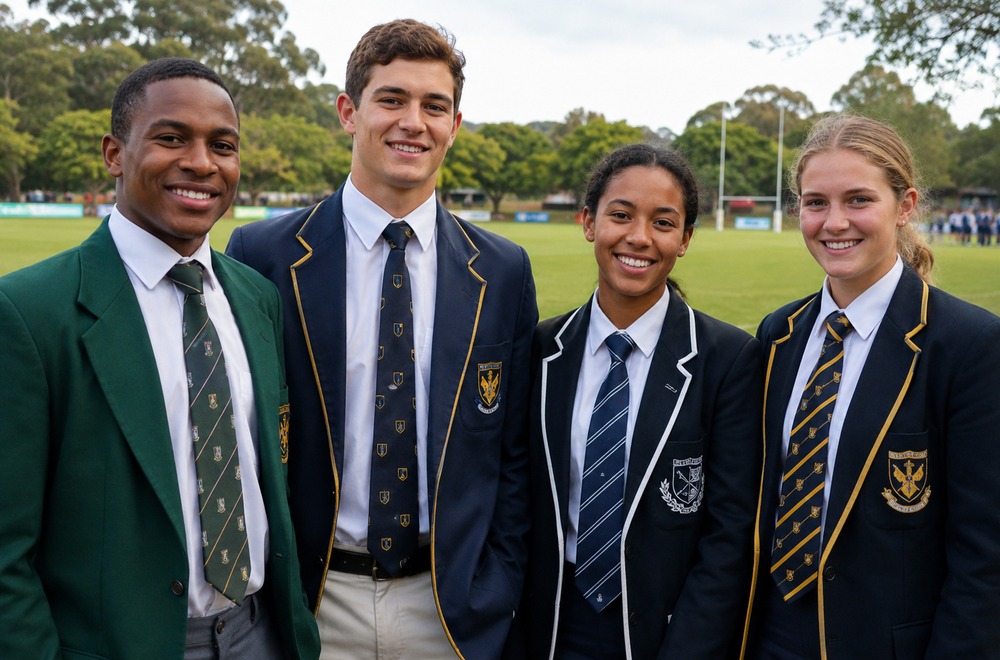
There is something that I find genuinely fascinating about the way sports and institutional identity became so deeply intertwined with neckwear, and I would say it happened long before the corporate world ever caught on to the idea. When you trace the evolution of custom ties from military dress to civilian life — that slow, deliberate journey where regiment colours and battalion insignia found their way onto the necks of soldiers and officers — you start to understand something important about why we wear what we wear. Those early military ties were not decorative accessories in any casual sense. They were declarations of belonging, of rank, of shared purpose. Sports ties, in many ways, are a direct descendant of that tradition, and it is one of the most compelling arguments for why sports ties are, without any doubt, custom ties in the fullest and most meaningful sense of the word.
Don't get me wrong, there are people in the industry who still draw an artificial line between what they call "proper" custom ties and sports ties, as though the latter are somehow a lesser category. I have never agreed with that view. Sports ties produced for a rugby club, a cricket association, or a school first team carry exactly the same design intent, the same identity function, and frankly the same manufacturing complexity as corporate ties ordered by a JSE-listed company. The stripes, the colours, the embroidered badge — these are not decorative afterthoughts. They are the entire point. When a player or a club official knots that tie before a formal function, they are putting on a piece of identity that has been carefully considered, and in most cases, carefully manufactured.
The British public school uniform tradition is instructive here. Back in the day, the school tie was one of the most tightly regulated garments in any institution's dress code. The stripe sequences were distinct, the colours were specific, and the rules around when and how custom ties were worn were taken seriously. South African schools inherited much of this tradition, and if you look at the school tie culture that developed here — particularly in the old Model C schools and the established independent schools — you will see the same pride of identity at work. Over time, sports colours followed the same logic. A first team tie, a colours tie, a touring tie — these became markers of achievement and belonging, and they were almost always custom ties produced to exact specifications.
These days, I would say the demand for well-made sports ties has never been more consistent. Clubs and sporting associations have become increasingly sophisticated about their visual identity, and they understand that poorly made custom ties reflect badly on the organisation as a whole. At Vinuchi, we have worked with rugby clubs, golf clubs, cricket associations, and a wide range of sporting bodies over the years, and the brief is almost always the same: get the colours right, make it look sharp, and make sure it lasts. That is the same brief we receive for corporate ties, and we approach it with exactly the same attention to detail.
One could say that the challenge with sports ties — and this is where the manufacturing conversation gets interesting — is that the colour requirements are often non-negotiable. A club's colours are its colours. There is no room for approximation. This is where the distinction between printed and woven ties becomes very important. A woven tie, produced on a jacquard loom with the pattern built into the fabric itself, will hold its colour and its structure in a way that a printed tie simply cannot match over time. For custom ties of any kind, but particularly for sports ties where the colours carry significant meaning, woven is almost always the superior choice.
The sports tie, then, is not a simplified or informal version of a custom tie. It is custom ties in one of their most historically grounded and symbolically loaded forms. The identity function that makes a corporate tie valuable — that sense of shared affiliation, of representing something larger than yourself — is exactly what a sports tie does, and has always done, arguably with even more emotional weight attached. I would say that any tie manufacturer worth their reputation understands this, and approaches every sports tie order with the same craft and commitment they would bring to any other custom work. At Vinuchi, that is simply how we think about it.