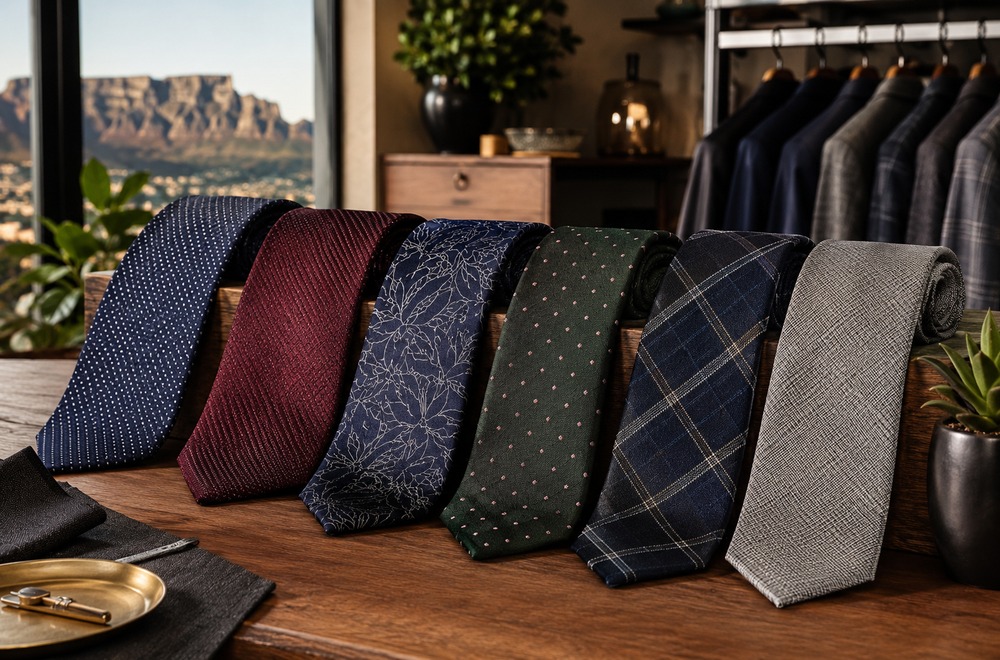
There is a tendency in the promotional and corporate gifting world to treat custom ties and custom scarves as completely separate categories, almost as if they belong to entirely different industries. I would say this is one of the more curious misconceptions I encounter, because when you look at the history of neckwear and how these two products evolved, you quickly realise that they are, in many ways, brother and sister. Same family, same craftsmanship principles, same materials in many cases, just expressed in slightly different forms.

Cast your mind back to the 17th century, when Croatian mercenary soldiers began wearing knotted cloth around their necks as part of their military dress. This simple piece of fabric caught the eye of King Louis XIII and his court, and what followed was a sweeping love affair between European fashion and neckwear that has never really ended. Now here is the interesting part — the scarf and the cravat developed almost simultaneously from this same moment in history. The long, rectangular piece of cloth that eventually became the modern necktie and the draped fabric that evolved into the scarf share an almost identical origin story. They diverged over centuries of tailoring tradition and social convention, but at their root, they come from the same instinct — the human desire to adorn and identify through fabric worn close to the face and neck.

These days, when clients approach us at Vinuchi about custom ties, I often find that the conversation naturally drifts toward custom scarves as well, and I don't think that is a coincidence. Organisations that take their visual identity seriously tend to understand instinctively that the same logic applies to both products. If you are investing in a beautifully woven corporate tie in your brand colours, with your logo rendered in precise jacquard detail, then a matching or complementary custom scarf simply makes sense. One could say it is the natural extension of the same thought — brand consistency expressed across a family of accessories rather than a single item.

Don't get me wrong, there are real differences between the two in terms of manufacturing. Custom ties, particularly woven ties, involve a specific loom construction that must accommodate a narrow, tapered form, and the interlining, the slip stitch, the folding — all of this requires a particular kind of expertise that is distinct from scarf production. Custom scarves, on the other hand, demand attention to drape, weight, and finish in ways that a tie does not. The fringing or hemming of a scarf, the choice between a lightweight silk twill and a heavier wool blend, these are considerations that sit slightly outside the tie manufacturing conversation. But the underlying disciplines — understanding woven versus printed construction, working with jacquard looms, selecting yarn weights and fibre compositions, managing colour accuracy — these are shared completely. A manufacturer that genuinely understands one will, almost by definition, understand the other.

Back in the day, South African textile manufacturing had a much broader base than it does today, and many of the skills required to produce quality custom ties and custom scarves were more widely available locally. The industry has contracted considerably since then, which means that the remaining manufacturers who have maintained these skills represent something genuinely worth preserving. At Vinuchi, we have always approached both custom ties and custom scarves with the same commitment to woven quality and precise construction, and I would say that this dual capability is actually one of the things that sets a serious manufacturer apart from what I would call a tie maker — someone who simply sources and prints, rather than a tie manufacturer who understands the full production process from fibre to finished product.

The corporate ties and school uniform markets in South Africa have historically driven demand for custom ties, and this remains true today. School ties carry a remarkable amount of institutional weight — they are identity garments in the truest sense. But I am seeing more organisations extend this thinking to include custom scarves as part of a broader uniform or gifting programme, particularly for roles where a tie is not appropriate or expected. This is a healthy development, and I think it reflects a more sophisticated understanding of how branded accessories function within an organisation's visual identity.

What strikes me most, looking at the direction both categories are heading, is that the future of custom ties and custom scarves lies in exactly this kind of integrated thinking. The clients who get the best results are the ones who approach both products as part of a single creative and manufacturing conversation — because that, ultimately, is precisely what they are.