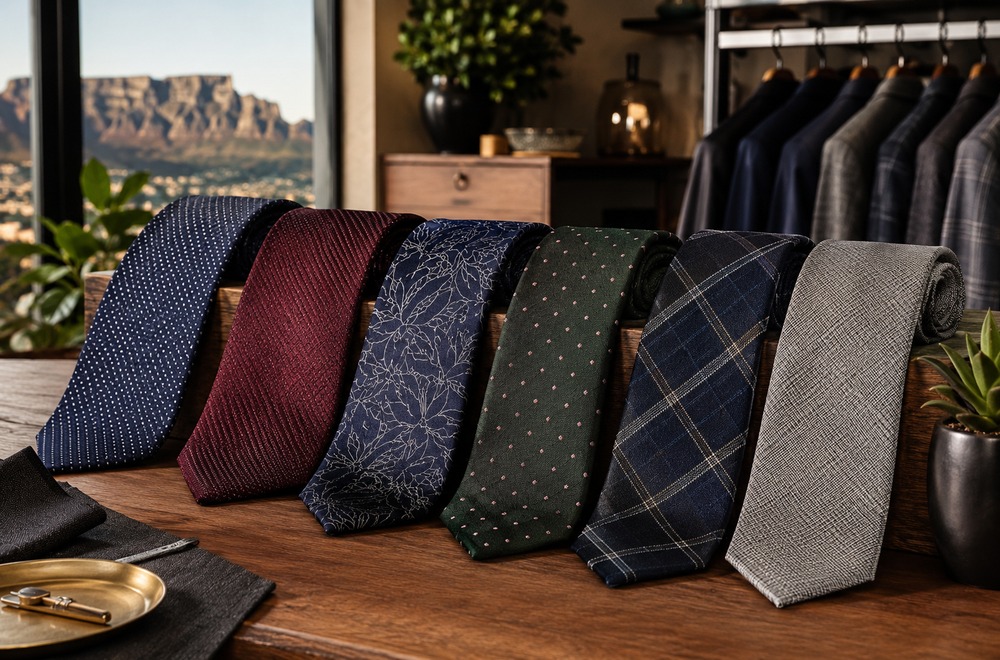
There is a moment in the history of corporate dressing — I would say it happened somewhere in the quiet corridors of 1960s and 70s boardrooms — when organisations began to truly understand the power of visual identity. Back in the day, a company's brand lived mostly in its letterhead and its signage. But slowly, thoughtfully, it migrated onto the people who represented it. The necktie became a flag of sorts, a declaration worn at chest height, and custom ties evolved from a nice-to-have into a genuine statement of institutional pride. What is interesting to me, having spent years watching this industry from the inside, is how that same logic has quietly crept downward — quite literally — to the feet.

So here is the question worth asking: do custom ties and corporate socks actually share meaningful territory, or are we forcing a connection that simply is not there?
I would say the connection is more real than people initially expect, and it becomes obvious once you stop thinking about garments in isolation and start thinking about how a brand actually lives on a human body. A corporate tie sits at the most visible point of a professional outfit. It draws the eye. It carries the colour palette, the logo, the woven pattern that says *this person belongs to this organisation*. At Vinuchi, we have been producing custom ties for South African companies, schools, and institutions for long enough to understand that clients are not simply buying a piece of fabric — they are buying a piece of belonging. The tie is a membership card you wear around your neck.

Corporate socks operate in a surprisingly similar psychological space, even if the visibility is lower. Don't get me wrong — I am not suggesting that socks replace the tie as the centrepiece of corporate identity. But these days, with business casual becoming the default dress code in many South African offices, the tie appears less frequently than it once did. When a brand can no longer rely on its custom ties to carry the full visual weight of its identity, it starts looking for other canvases. A well-designed corporate sock, produced with the same attention to colour accuracy and logo integrity that one brings to a quality tie, fills that gap rather elegantly. It is subtle, it is modern, and frankly, it has become a talking point in the right rooms.

From a manufacturing perspective, the two products have more in common than their respective industries would have you believe. Both require precision in colour matching — and any tie manufacturer worth the name will tell you that getting a corporate pantone colour reproduced accurately in woven or knitted form is far more demanding than it looks on a brief. Both require an understanding of how pattern and repeat work across a narrow fabric format. And both live or die on the quality of the yarn and the integrity of the finish. One could say that a business which has mastered the art of producing custom ties has already built much of the technical foundation needed to approach corporate socks with genuine credibility.

The South African market, I think, is still warming up to this combination. Internationally — particularly in the United Kingdom and parts of Europe — branded socks or corporate socks have been part of corporate gifting and staff uniform programmes for some years now. Here, custom ties remain the anchor product for most corporate identity briefs, and rightly so. It carries history, formality, and a visual authority that corporate socks simply cannot replicate. But the two products together tell a more complete story, particularly for organisations that want their brand expressed consistently from the collar down.

What I find genuinely exciting is where this is heading. As South African companies invest more thoughtfully in staff presentation and brand culture, the brief is expanding. Clients who once came to a quality manufacturer like Vinuchi asking only for custom ties are now thinking about the broader uniform conversation. Corporate socks are part of that conversation, and I believe they will become a standard line item on corporate identity briefs within the next few years.

The synergy, in the end, is not just about aesthetics. It is about the evolving understanding that a brand worn consistently and cohesively — from the knot at the collar or custom ties to the pattern at the ankle or corporate socks — creates something greater than the sum of its individual garments.