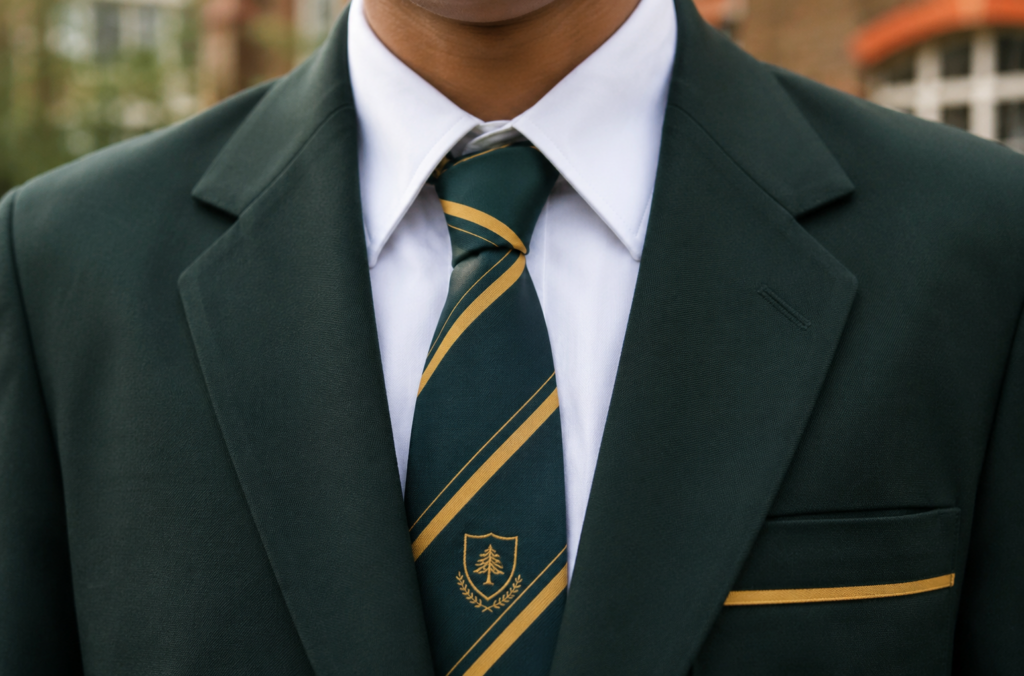
There is something I find genuinely moving about the moment custom ties are placed around someone's neck for the first time as part of a formal ritual. I have been in this industry long enough to have witnessed tie ceremonies across schools, corporates, sports clubs, and civic organisations, and I would say that very few moments in institutional life carry the same quiet weight. It is worth remembering that the necktie itself became a symbol of belonging and rank long before it became a fashion accessory. Back in the day, when King Louis XIII of France began popularising decorative neckwear at the French court in the early 17th century, what he was really doing was creating a visual language of membership and status. The tie said something about who you were and where you belonged. That foundational idea has never really left us, and it is precisely why tie ceremonies remain so relevant today.

A tie ceremony, at its core, is about transition and identity. Whether it marks a student's entry into a senior phase of schooling, an employee joining a company's ranks, or a sportsperson earning their colours, the ritual acknowledges that something has changed. The individual is now part of something larger than themselves. What I have noticed over many years of supplying ties to schools and corporates across South Africa is that the ceremony always lands harder, always feels more significant, when the tie itself has been made with intention. Don't get me wrong, a stock tie from a catalogue can serve the functional purpose, but there is a palpable difference when the tie has been specifically designed for that organisation, with its colours, its crest, its unique identity woven or printed into the fabric. Tie ceremonies built around custom ties carry a different energy entirely, and I think most people in the room can feel it, even if they cannot quite articulate why.

From a manufacturing perspective, this is where the distinction between tie makers and proper tie manufacturers becomes important. A tie makers assemble a product.  tie manufacturers like Vinuchi are involved in the full process, from the initial design consultation through to the selection of materials, the construction method, and the finished quality of the product that will ultimately be handed to someone during one of these ceremonies. When organisations come to us wanting custom ties for a specific tie ceremony, whether it is for a school's prefect investiture or a corporate onboarding event, the conversation goes far deeper than simply choosing a colour. We talk about what the tie needs to communicate, how long it needs to last, and what the recipient will feel when they put it on. That level of intentionality is what separates a meaningful tie ceremony from a mundane administrative exercise.

These days, I am pleased to say that more South African schools and companies are investing in properly designed custom ties rather than settling for generic alternatives. There is a growing awareness that the objects we use in our rituals matter. A well-constructed woven tie, for instance, carries a richness and permanence that a printed tie simply cannot replicate in the same way, and for tie ceremonies where the garment is meant to be kept and treasured, that distinction is not trivial. One could say that the tie has become the most enduring souvenir of the tie ceremony itself, the physical object that the recipient will look at years later and remember exactly where they were and what it meant to receive it.

What excites me about where this is all heading is that organisations are becoming more sophisticated in how they think about their identity, and the tie is increasingly seen as a serious expression of that identity rather than an afterthought. The tie ceremony is growing in ceremonial complexity and emotional significance, and the demand for custom ties that are worthy of those moments is growing with it. South African institutions, in particular, have always had a strong tradition of uniform culture and ceremonial dress, and I believe we are entering a period where that tradition is being renewed and deepened rather than abandoned. At Vinuchi, that is the kind of work that reminds me why quality manufacturing still matters in a world full of shortcuts.