
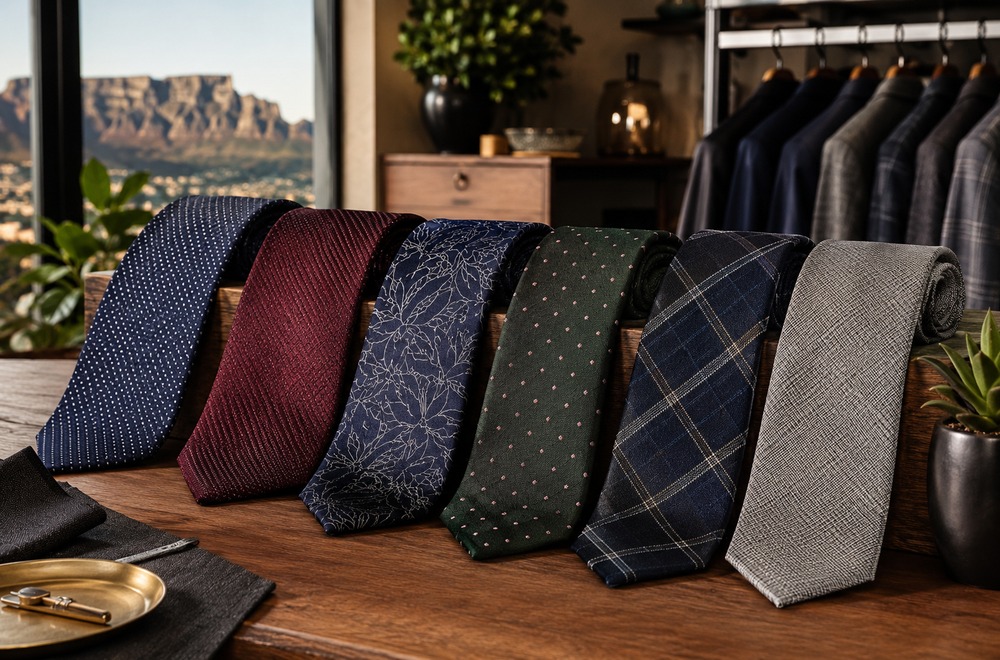
There is something deeply satisfying about the moment a student walks across a stage to collect their school scrolls. Years of effort, late nights, and early mornings distilled into a single piece of rolled parchment and an embroidered piece of fabric, handed over with a handshake and a photograph. I have always found it fascinating how certain objects carry that kind of weight — they become symbols far beyond their physical form. And I would say the same is absolutely true of well-made custom ties. Back in the day, when Croatian soldiers first wore knotted scarves around their necks in the seventeenth century — the origin story of the modern cravats (or todays custom ties) — nobody could have imagined that this simple strip of fabric would one day carry the identity of an entire school, a regiment, or a corporation. Yet here we are.
The connection between custom ties and school scrolls struck me recently in a way I had not quite articulated before. Both objects mark belonging. Both are ceremonial in their own right. school scrolls say: this person has completed something, they are now part of a community of achievement. A school ties say almost exactly the same thing, just from the very first day rather than the last. When a child puts on their school uniform for the first time, those custom ties around their collars is a declaration of membership. It says which institution they belong to, what values that institution holds, and in many cases, what year group or house they represent. One could say that custom ties are a wearable version of the scroll — earned not at the end, but worn throughout the journey.
This is why custom ties are taken so seriously by schools that truly understand their own identity. Don't get me wrong, a generic striped tie from a catalogue will do the job of covering a collar, but it tells nobody anything meaningful. Properly designed, custom-made school ties communicate history, colours chosen with intention, patterns that carry meaning, and quality that reflects the institution's standards. At Vinuchi, we work with schools across South Africa who understand this distinction deeply. The brief for school ties are often far more complex than people outside the industry realise — balancing heraldic colours, house stripes, badge placement, and the kind of durability that survives years of schoolboys and schoolgirls who are, let us be honest, not always gentle with their uniforms.
The manufacturing process behind custom ties is where I find the real story, though. These days, there is a significant difference between tie manufacturers and what I would call tie makers — and that gap matters enormously when the product carries an institution's name. A tie manufacturer works with proper looms, understands the difference between printed and woven ties, and can advise a client on why a woven design will hold its colours and structure across a decade of wear while a printed alternative might not survive the first winter. Woven custom ties carry the design within the fabric itself rather than on the surface, which is why they remain the gold standard for school ties and corporate ties alike. At Vinuchi, this is a conversation we have with clients constantly, because the upfront cost difference between printed and woven ties is often the deciding factor — and it really should not be, given the long-term value.
School scrolls and custom ties share something else as well: both are increasingly appreciated as crafted objects in a world that has largely moved toward the disposable and the digital. There is a reason schools still hand out physical scrolls at graduation rather than sending an email with a PDF attachment. The physical object matters. It is held, framed, displayed and worn. I would say the same instinct explains why quality school ties and corporate ties continue to hold their relevance even as dress codes relax across many industries. They are tactile symbols of something larger than themselves.
The South African school uniform tradition runs deep, shaped by British public school heritage adapted across generations into something distinctly local. And I think that tradition deserves to be honoured with the same care that goes into any commemorative object — including, yes, the school scrolls that wait at the end of the journey. If the scroll marks the destination, then custom ties mark the road. Both deserve to be made well, with intention, by people who understand what they actually represent. At Vinuchi, that understanding is exactly what we bring to every custom tie brief we receive — and I genuinely would not have it any other way.