There is a moment in every manufacturer's career when a client asks a question that forces you to stop and really think. For me, it happened years ago when a school procurement officer sat across from me and asked, quite simply, "What is the difference between  *real* custom tieS and oneS that are just printed with our logo?" I have been asked variations of that question hundreds of times since, and I would say it remains one of the most important conversations you can have when you are serious about quality. The answer, in my opinion, always leads back to the same place: woven ties.

To understand why, it helps to know a little history. Long before custom ties became a commercial product, they were a statement of belonging. The British public school system, which flourished through the 19th and into the 20th century, was perhaps the first institution to truly formalise the idea of custom ties as an identity marker. Schools like Eton and Harrow used distinctive striped and coloured ties to separate their boys from every other school in the country, and the tradition was built not on printed fabric but on woven cloth. The stripes were *in* the fabric, not *on* it. That distinction is everything. When South African schools adopted uniform traditions — largely through our colonial and British educational inheritance — they carried that same philosophy forward. A school tie was not a piece of fabric with a badge stamped onto it. It was a woven article that communicated permanence, pride, and institution. That legacy is something I think about constantly when we produce custom ties for schools here at Vinuchi.

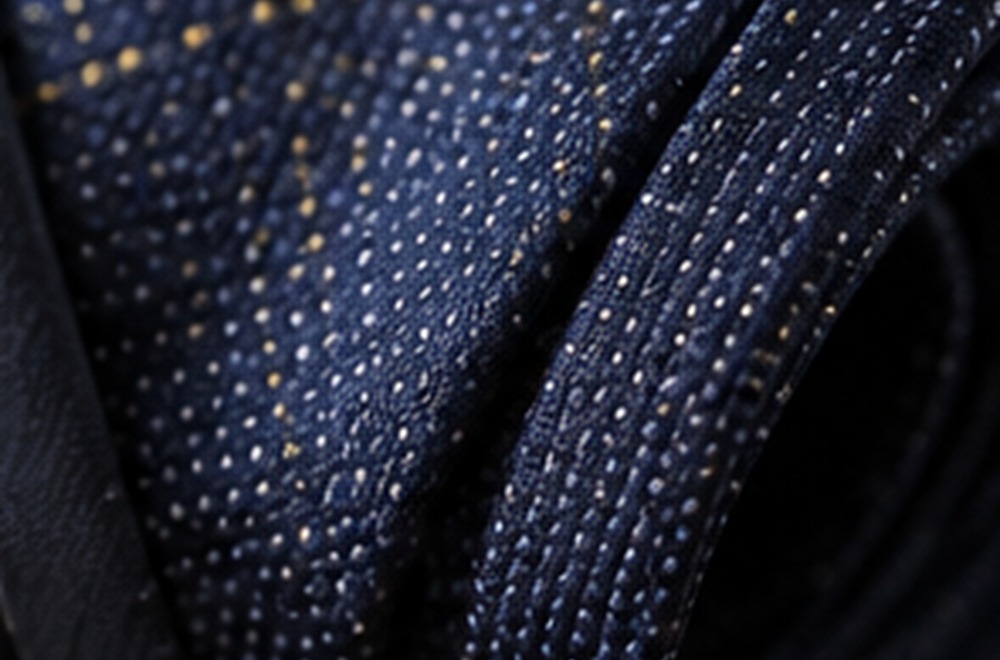
So what exactly are woven ties ? In the simplest terms, woven ties are created on a loom, where the colour, pattern, and design are built directly into the fabric structure during the weaving process itself. The design is not applied to the surface afterwards — it is the fabric. This means the colours remain vibrant without cracking or fading, the pattern is identical on the reverse side, and the overall hand-feel of the cloth is substantially richer and more structured than its printed counterpart. Woven ties, and custom ties in general, represent a significant investment in the production process, which is why not every supplier offers them. There is real technical skill involved, and the lead times are longer, but the end result is a product that genuinely lasts.
Printed ties, don't get me wrong, have their place. They are faster to produce, considerably more affordable, and they can reproduce photographic-quality imagery and complex multicolour logos with a precision that weaving simply cannot match. For certain applications — promotional events, short-run corporate campaigns, or designs with very fine detail — printed ties make complete sense. I would never dismiss them entirely. But if you are commissioning custom ties for schools, for a corporate identity programme, or for any context where the tie is meant to represent an institution over many years, then printing is, I would say, the lesser option. The custom ties will look different in three years than they do on day one. woven ties, handled properly, will not.

These days, there is a growing awareness among South African organisations that the quality of their branded garments reflects directly on their brand values. I have seen a real shift in the conversations we have at Vinuchi, with clients arriving better informed and more willing to invest in woven custom ties rather than simply taking the cheapest available option. Corporates that are building a genuine identity programme, and schools that want their uniforms to carry real institutional weight, are increasingly choosing woven. That is a positive development for the industry, and honestly, it is a positive development for the people wearing the ties.

Back in the day, South African textile manufacturing had a much broader base than it does today, and woven tie production was more widely available locally. The industry has contracted significantly, which makes the work that quality-focused tie manufacturers do all the more important. At Vinuchi, producing custom ties for schools and corporate clients using woven fabrication is not just a product offering — it is a commitment to keeping a certain standard alive in the local market.

One could say that a printed tie tells people what your brand looks like. Woven ties tell them what your brand *is*. That difference, subtle as it sounds, matters enormously to the people who wear them every single day.