
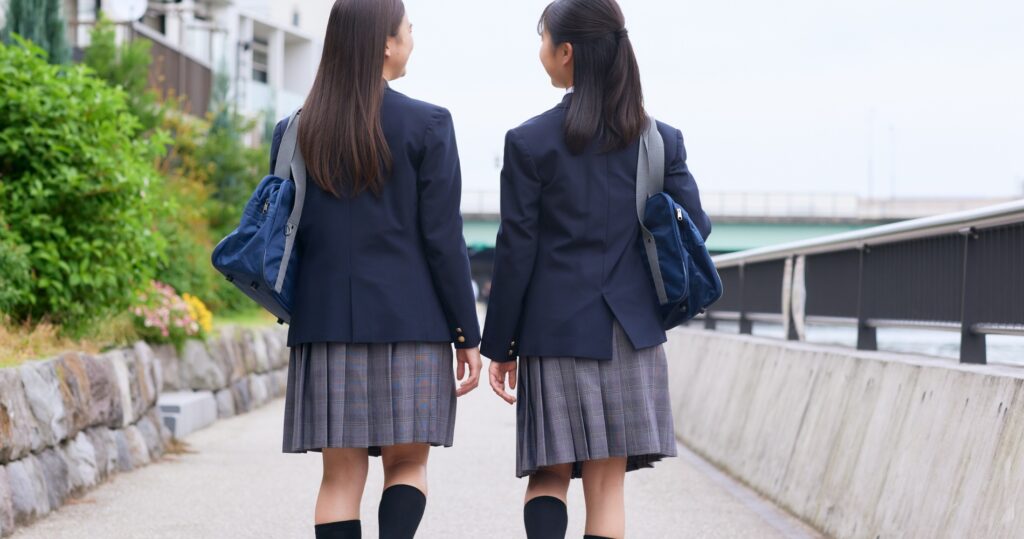
It strikes me as one of those quiet missed opportunities that the uniform industry rarely talks about openly. Walk into almost any South African school at prize-giving or graduation, and you'll see the matric boys proudly wearing their matric ties — a tangible symbol of seniority, of having earned the right to stand apart from the junior years. There's genuine ceremony attached to that tie. And yet, when you look across the hall at the matric girls, the distinction is often far more subtle, sometimes barely there at all. A small badge, perhaps a slightly different blouse, or in many cases nothing that really sets them apart in a meaningful, wearable way. I would say this is one of the most overlooked gaps in South African school uniform tradition, and **custom scarves** are the obvious answer that most schools simply haven't considered yet.
Custom scarves have an extraordinarily rich history in dress and identity. Long before custom ties became the default marker of institutional belonging — before the Croatian mercenaries introduced the knotted neckcloth to European fashion in the 1600s, before King Louis XIII helped formalise neckwear as a symbol of status and presentation — the draped fabric around the neck and shoulders was already communicating rank, region, and allegiance across cultures worldwide. British public schools took custom ties and ran with them as a symbol of house and year, and that tradition migrated beautifully into South African school culture. But what those same institutions often missed is that the scarf carries every bit as much symbolic weight, and arguably more versatility, more visibility, and more elegance for female uniforms in particular. Well-designed, quality custom scarves worn by matric girls is immediately noticeable. It commands the room in a way that a small badge simply cannot.
From a manufacturing perspective, I find it genuinely puzzling that more schools haven't explored this. These days, the production of custom scarves is far more accessible than most uniform committees realise. Back in the day, custom scarves required enormous minimum order quantities that would have made a scarf programme impractical for a single school year group. The economics just didn't work. But the landscape has changed considerably. At Vinuchi, we work with schools and corporates to produce custom ties, custom scarves, and associated uniform pieces, and I can tell you from direct experience that a properly briefed custom scarf project — with the school's colours, crest, or a signature pattern added into the design — is entirely achievable at quantities that suit a typical matric class. The result is something that feels genuinely premium, because it is.
Don't get me wrong, I understand the institutional inertia here. School uniform decisions move slowly, and rightly so in many ways — parents invest in these garments and continuity matters. The matric ties tradition is deeply embedded and I'm certainly not suggesting schools abandon it. What I am suggesting is that custom ties and custom scarves are not competing products. They serve different purposes and, crucially, different members of the school community. One could say that awarding a custom scarves to matric girls alongside the matric ties being awarded to boys actually strengthens the overall tradition rather than diluting it. It says the school has thought carefully about how both groups are recognised and distinguished.
There's also a corporate identity dimension worth considering. Schools that have invested in strong, coherent visual identities know that every touchpoint matters. A custom scarves in the school's signature colours, worn by the most senior girls, is a walking advertisement for the institution's values and attention to detail. It photographs beautifully, it shows up at every formal occasion, and it becomes a treasured keepsake in the way that the best uniform pieces always do. Tie manufacturers like us at Vinuchi see this with corporate clients constantly — the pieces that are genuinely custom, genuinely crafted, carry an emotional resonance that off-the-shelf items simply never achieve.
I think the next decade will see South African schools pay far more deliberate attention to how they honour and distinguish their senior girls through uniform by offering items such as custom scarves The conversation about inclusive, thoughtful school identity is gaining momentum, and custom scarves sit perfectly at the intersection of tradition, craftsmanship, and genuine recognition. The question isn't really whether schools can afford to do this. The question is whether they can afford to keep overlooking it.